



Common Coordination Failures in Rebar Detailing (And How to Avoid Them)
Modern construction projects involve multiple disciplines working simultaneously to transform design concepts into real structures. Structural engineers, architects, MEP consultants, contractors, fabricators, and site teams all contribute to project success. However, when communication and coordination break down, even the best designs can encounter significant challenges.
One of the most overlooked causes of project delays and rework is Coordination Failures in Rebar Detailing.
A reinforcement drawing may be structurally correct, but if it conflicts with architectural elements, MEP systems, openings, embeds, or site conditions, construction teams face costly modifications and delays.
Effective coordination is no longer optional. In today’s fast-paced construction environment, accurate and coordinated rebar detailing plays a critical role in ensuring constructability, reducing RFIs, minimizing rework, and maintaining project schedules.
At Kryptos Rebar, coordination reviews are integrated into every detailing workflow to deliver fabrication-ready reinforcement solutions that work in real-world construction environments.
👉 Explore our
Rebar Detailing Services
https://kryptosrebar.com/kryptos-rebar-detailing-and-estimation-services/
Why Coordination Matters in Rebar Detailing
The Foundation of Successful Construction Execution
Rebar detailing acts as the bridge between design and construction.
It converts engineering calculations into:
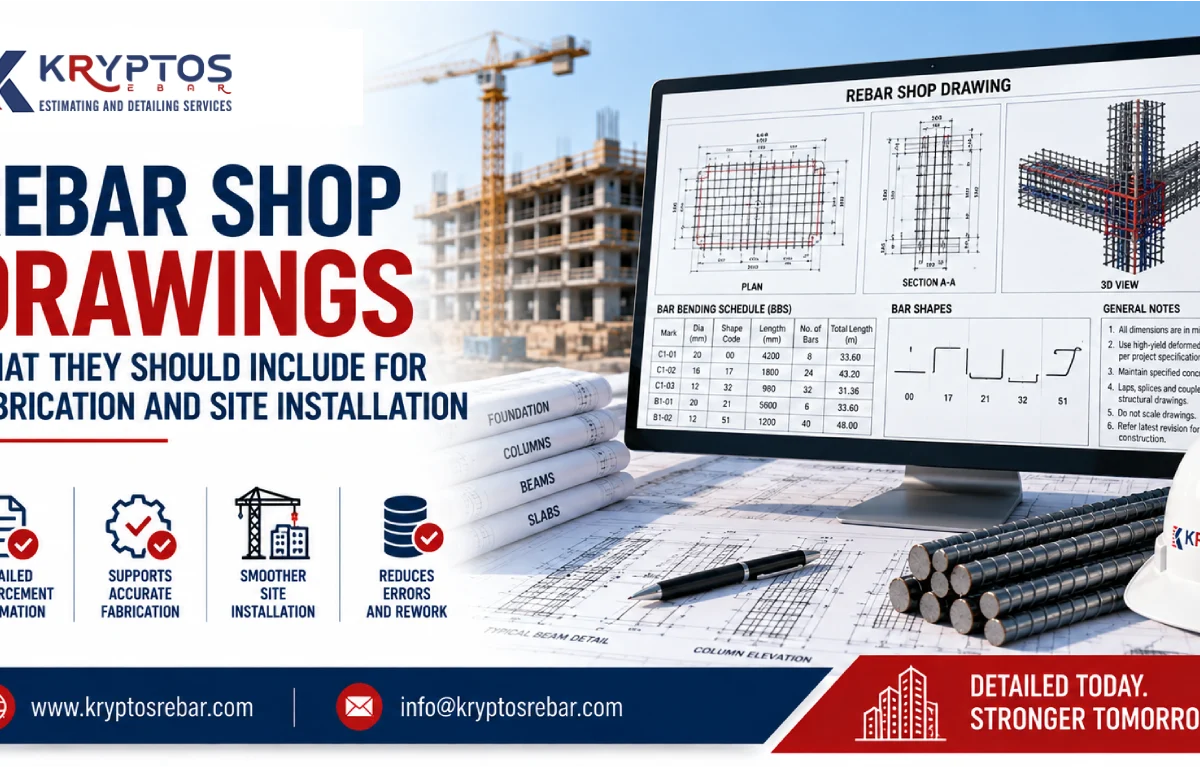
1.Reinforcement shop drawings
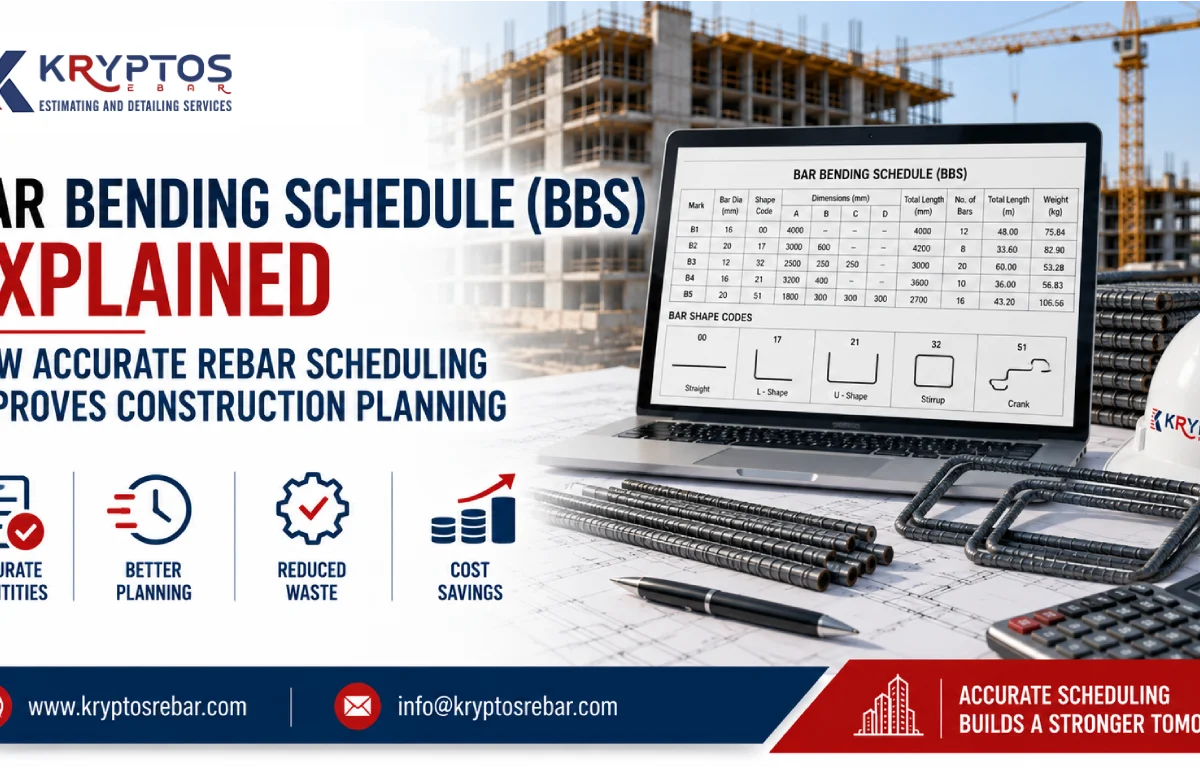
2.Bar Bending Schedules (BBS)
3.Fabrication instructions
4.Site placement guidance
For detailing to be successful, reinforcement layouts must align with:
1.Structural requirements
2.Architectural features
3.Mechanical systems
4.Electrical systems
5.Plumbing layouts
6.Embedded components
Without proper coordination, reinforcement becomes difficult or impossible to install correctly.
This is why preventing Coordination Failures in Rebar Detailing is essential for successful project execution.
Common Coordination Failure #1: Structural and MEP Clashes
The Most Frequent Site Problem
One of the most common coordination issues occurs when reinforcement conflicts with MEP systems.
Typical clashes involve:
1.Ducts
2.Pipes
3.Cable trays
4.Sleeves
5.Service openings
Without proper coordination:
1.Reinforcement may block service routes
2.MEP systems may require redesign
3.Site modifications become unavoidable
Consequences include:
1.Delayed installations
2.Increased RFIs
3.Cost overruns
4.Rework
How to Avoid It
✔ Conduct interdisciplinary reviews early
✔ Coordinate structural and MEP drawings before detailing begins
✔ Use clash detection software
✔ Review service openings before issuing shop drawings
👉 Building Information Modeling (BIM)
https://www.autodesk.com/solutions/bim
Common Coordination Failure #2: Uncoordinated Openings and Penetrations
When Reinforcement Blocks Critical Openings
Openings are essential for:
1.Elevators
2.Mechanical shafts
3.Plumbing routes
4.Electrical services
A frequent detailing mistake occurs when reinforcement layouts are finalized before openings are confirmed.
This results in:
1.Bar cutting on-site
2.Structural modifications
3.Delayed approvals
How to Avoid It
✔ Verify all architectural and MEP openings
✔ Freeze opening locations before detailing
✔ Review slab and wall penetrations during coordination meetings
✔ Issue updated drawings whenever revisions occur
Common Coordination Failure #3: Reinforcement Congestion
When Too Much Steel Occupies Too Little Space
Reinforcement congestion often develops because multiple disciplines add requirements without considering constructability.
Critical congestion zones include:
1.Beam-column joints
2.Core walls
3.Transfer beams
4.Shear walls
Congestion creates:
1.Installation difficulties
2.Poor concrete compaction
3.Honeycombing risks
4.Site delays
How to Avoid It
✔ Identify congestion zones early
✔ Optimize bar sizes and spacing
✔ Use staggered lap locations
✔ Consider mechanical couplers where appropriate
👉 ACI 318 Concrete Design Code
https://www.concrete.org/store/productdetail.aspx?ItemID=318
Common Coordination Failure #4: Inconsistent Drawing Revisions
The Hidden Cause of Site Confusion
Large projects undergo frequent design updates.
A common coordination failure occurs when:
1.Structural drawings are revised
2.Architectural drawings are updated
3.Rebar detailing remains unchanged
This leads to:
1.Fabrication errors
2.Incorrect reinforcement placement
3.Costly corrections
How to Avoid It
✔ Establish a revision control process
✔ Track all drawing updates
✔ Maintain version management
✔ Confirm latest approved drawings before detailing
Common Coordination Failure #5: Lack of Fabrication Coordination
Drawings That Look Good but Can’t Be Built
A reinforcement drawing may satisfy design requirements while creating fabrication challenges.
Examples include:
1.Excessively complex bar shapes
2.Difficult bending requirements
3.Unreasonable transportation lengths
These issues affect:
1.Fabrication efficiency
2.Material handling
3.Installation speed
How to Avoid It
✔ Coordinate with fabrication teams
✔ Review bending requirements
✔ Optimize bar lengths
✔ Simplify reinforcement arrangements where possible
Common Coordination Failure #6: Poor Bar Bending Schedule Integration
When BBS and Drawings Don’t Match
The Bar Bending Schedule (BBS) is a critical project document.
If BBS data differs from shop drawings:
1.Procurement errors occur
2.Fabrication mistakes increase
3.Installation becomes confusing
How to Avoid It
✔ Verify BBS against shop drawings
✔ Implement multi-level QA reviews
✔ Use standardized scheduling practices
👉 BS 8666 Reinforcement Scheduling Standard
https://www.bsigroup.com/en-GB/bs-8666/
How BIM Improves Rebar Coordination
Digital Coordination Before Construction
Modern projects increasingly rely on BIM workflows to reduce coordination failures.
Benefits include:
1.Clash detection
2.Visual reinforcement modeling
3.Multi-discipline coordination
4.Constructability analysis
Software commonly used:
1.AutoCAD
2.Revit
3.Tekla Structures
4.RebarCAD
👉 Tekla Structures
https://www.tekla.com/products/tekla-structures
BIM allows project teams to identify conflicts before fabrication begins, significantly reducing project risks.
Warning Signs of Coordination Failures
Indicators That Your Project Has Coordination Problems
Watch for:
1.Frequent RFIs
2.Multiple drawing revisions
3.Site reinforcement modifications
4.MEP clashes
5.Fabrication delays
6.Unclear reinforcement layouts
These warning signs often indicate deeper coordination issues that should be addressed immediately.
Best Practices to Prevent Coordination Failures in Rebar Detailing
Proven Strategies for Better Project Outcomes
✔ Start Coordination Early
Coordination should begin during design development—not after detailing starts.
✔ Hold Multi-Discipline Review Meetings
Regular reviews improve communication and reduce conflicts.
✔ Utilize BIM Coordination
Digital clash detection significantly improves project efficiency.
✔ Maintain Drawing Revision Control
Ensure all teams work from current documents.
✔ Prioritize Constructability
Detailing should consider site execution, not just design requirements.
✔ Conduct Quality Assurance Reviews
Multi-stage QA checks help identify coordination issues before release.
The Cost of Poor Coordination
Why Small Coordination Issues Become Major Problems
Poor coordination impacts:
1.Construction schedules
2.Project budgets
3.Structural quality
4.Site productivity
Common consequences include:
1.Rework
2.Delays
3.Material waste
4.Fabrication errors
5.Contractor claims
The cost of fixing coordination failures on-site is significantly higher than resolving them during the detailing phase.
Conclusion
Coordination Failures in Rebar Detailing are among the leading causes of project delays, rework, and construction inefficiencies.
From MEP clashes and reinforcement congestion to revision control issues and fabrication conflicts, poor coordination creates challenges that affect every stage of construction.
Successful projects depend on:
1.Early coordination
2.Clear communication
3.Constructability-focused detailing
4.BIM integration
5.Rigorous QA processes
By implementing these best practices, project teams can reduce risks, improve efficiency, and ensure smooth project execution.
At Kryptos Rebar, we prioritize coordination, accuracy, and constructability to deliver reinforcement detailing solutions that work seamlessly from design through construction.
Need Accurate & Constructible Rebar Detailing for Your Project?
Connect with Kryptos Rebar for precision-driven rebar detailing, estimation, and constructability-focused reinforcement solutions.
📩 Email now: [email protected]
Let’s optimize your structure with precision and confidence.