



Constructability in Rebar Detailing: Why Good Designs Fail on Site
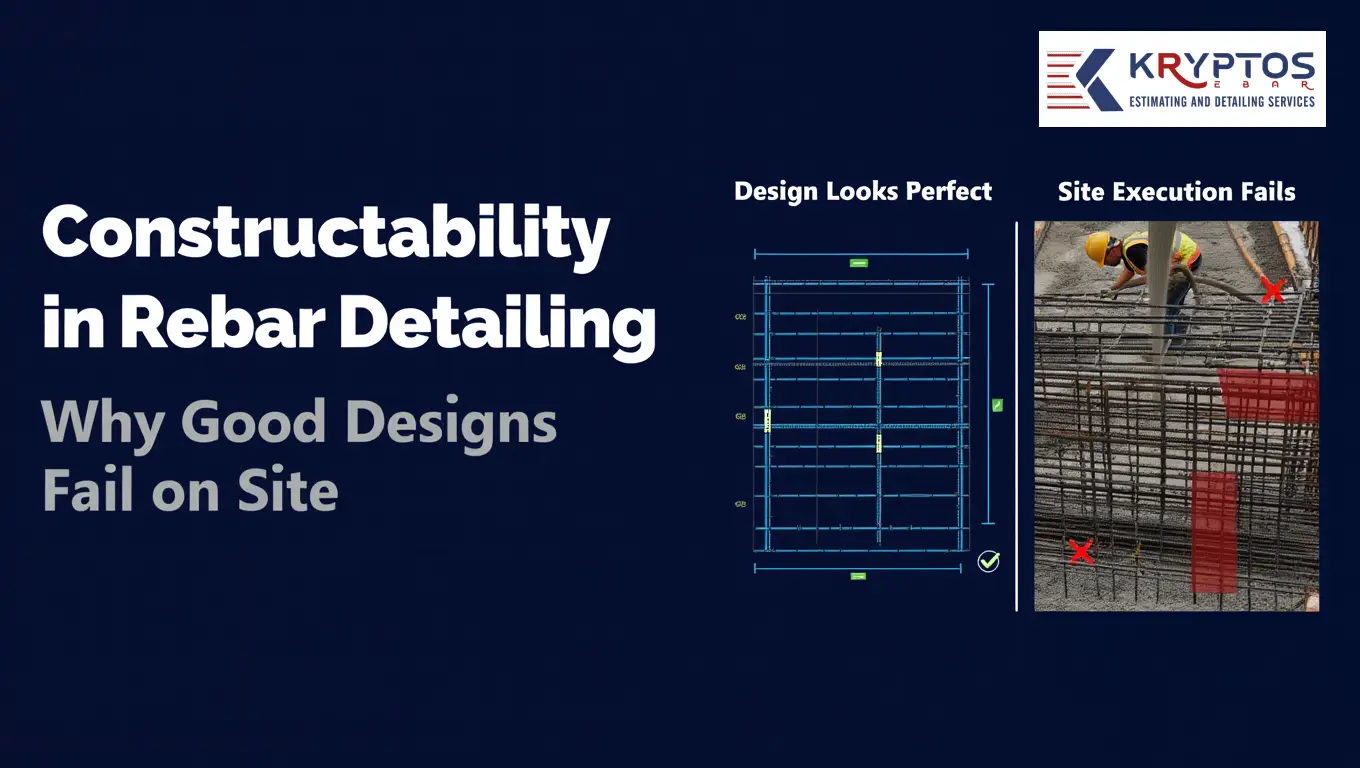
In structural engineering, a design may appear technically perfect on paper yet fail completely during execution on-site. One of the biggest reasons behind this disconnect is poor Constructability in Rebar Detailing.
Many projects experience:
1.Reinforcement congestion
2.Site modifications
3.Rework
4.Delayed approvals
5.Fabrication confusion
even when the structural design itself is accurate.
Why?
Because design alone is not enough. A structure must also be practical, buildable, and coordinated for real-world construction conditions.
At Kryptos Rebar, constructability is treated as a critical part of the detailing process—not an afterthought. Effective detailing ensures that reinforcement can be fabricated, transported, placed, and concreted efficiently without compromising structural intent.
👉 Learn more about our Rebar Detailing Services
https://kryptosrebar.com/service/
What is Constructability in Rebar Detailing?
Understanding Practical Reinforcement Design
Constructability in Rebar Detailing refers to the ability of reinforcement drawings and detailing layouts to be executed practically and efficiently on-site.
It combines:
1.Structural engineering principles
2.Fabrication feasibility
3.Site accessibility
4.Reinforcement sequencing
5.Concreting requirements
A constructible design ensures:
1.Reinforcement fits properly
2.Workers can place bars correctly
3.Concrete can flow without blockage
Site execution remains efficient
Without constructability, even technically correct drawings can become impossible to execute.
Why Good Structural Designs Fail on Site
The Gap Between Design and Execution
Structural engineers typically focus on:
1.Load paths
2.Structural behavior
3.Strength requirements
4.Code compliance
However, site teams face entirely different challenges:
1.Bar placement limitations
2.Crane access
3.Worker movement
4.Concrete vibration space
5.Congested joints
This gap between engineering intent and field execution is where many failures begin.
Common examples include:
1.Beam-column joint congestion
2.Excessive lap splices
3.Improper anchorage zones
4.Unclear bar sequencing
5.Impossible reinforcement spacing
A drawing may satisfy design software, but if workers cannot physically install reinforcement properly, the structure faces serious risks.
Reinforcement Congestion Issues
One of the Biggest Constructability Problems
Reinforcement congestion occurs when too many bars occupy a confined area, making installation and concreting difficult.
Congestion is common in:
1.Beam-column joints
2.Shear walls
3.Transfer beams
4.Coupling beams
5.Footing intersections
Problems caused by congestion:
1.Honeycombing
2.Improper concrete compaction
3.Bar displacement
4.Cover violations
5.Construction delays
To avoid these issues, detailing teams must consider:
1.Bar layering
2.Staggered laps
3.Coupler alternatives
4.Bar diameter optimization
5.Concrete flow space
Global standards such as
👉 ACI 318 Concrete Design Code
https://www.concrete.org/store/productdetail.aspx?ItemID=318
provide reinforcement detailing guidelines that support constructability and structural safety.
Rebar Anchorage in Slabs
Anchorage is essential to ensure that reinforcement bars effectively transfer forces into concrete.
For negative reinforcement:
1.Bars must extend beyond support zones
2.Adequate development length must be provided
3.Hooks or bends may be required
Without proper anchorage:
1.Bars may slip
2.Load transfer becomes ineffective
3.Cracks develop prematurely
Anchorage ensures continuity between structural elements and improves overall slab performance.
The Importance of Site Coordination in Rebar Detailing
Why Coordination Determines Project Success
Good detailing is not created in isolation.
Constructability depends heavily on coordination between:
1.Structural engineers
2.Architects
3.MEP consultants
4.Fabricators
5.Site engineers
Without coordination:
1.Reinforcement clashes with MEP systems
2.Openings interfere with bars
3.Embedded items create conflicts
4.Site modifications become unavoidable
Modern workflows using
👉 Building Information Modeling (BIM)
https://www.autodesk.com/solutions/bim
help improve coordination and reduce clashes before construction begins.
At Kryptos Rebar, detailing workflows focus heavily on coordination reviews to ensure fabrication-ready outputs.
Bar Bending Schedule Accuracy
The Hidden Backbone of Constructability
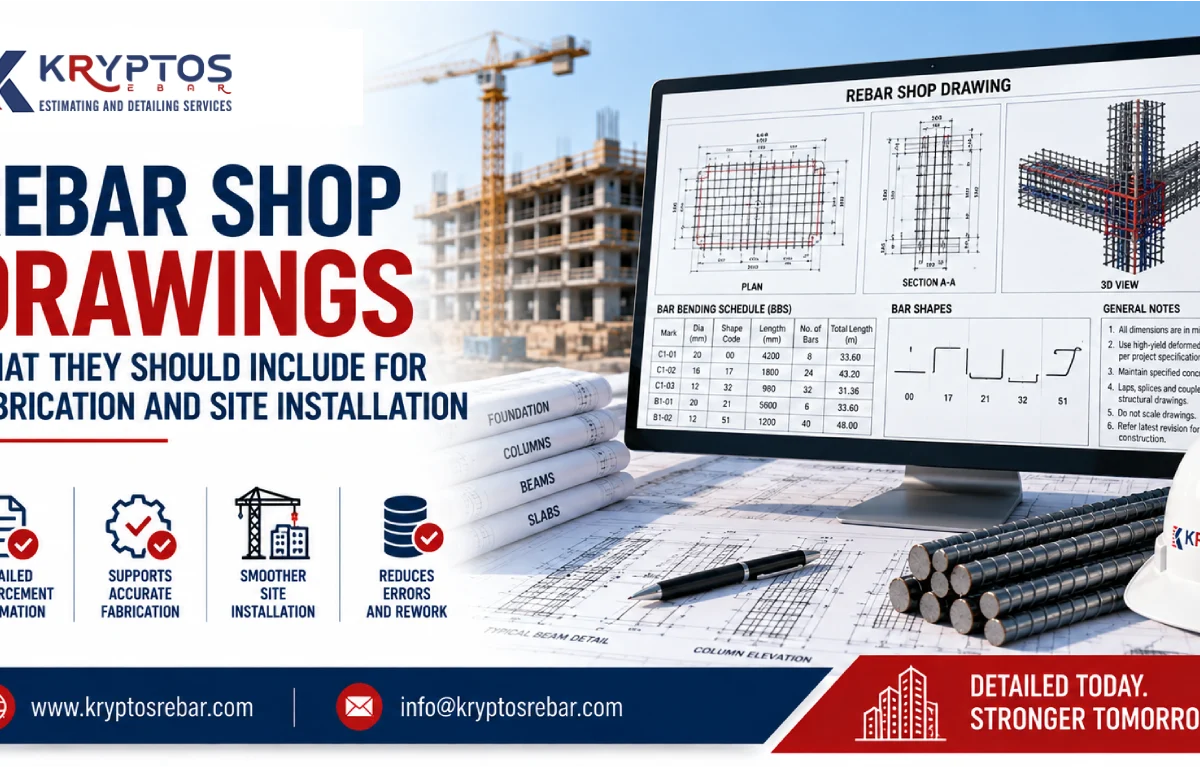
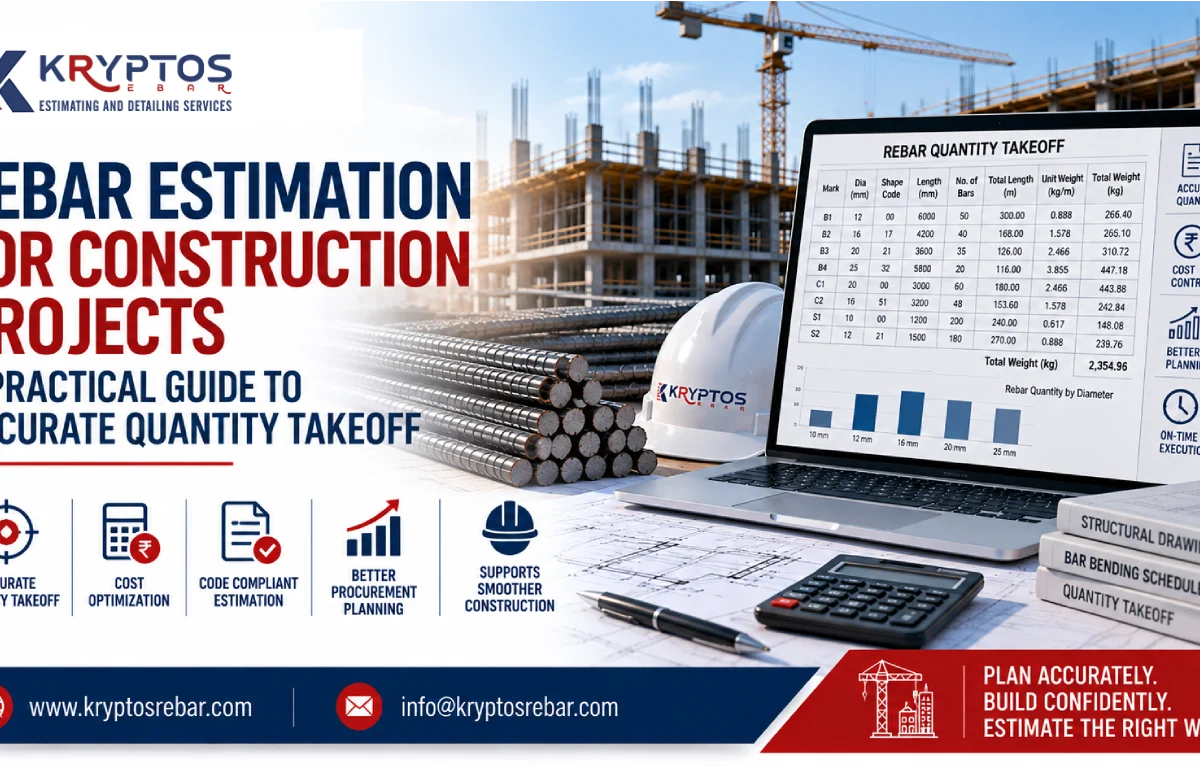
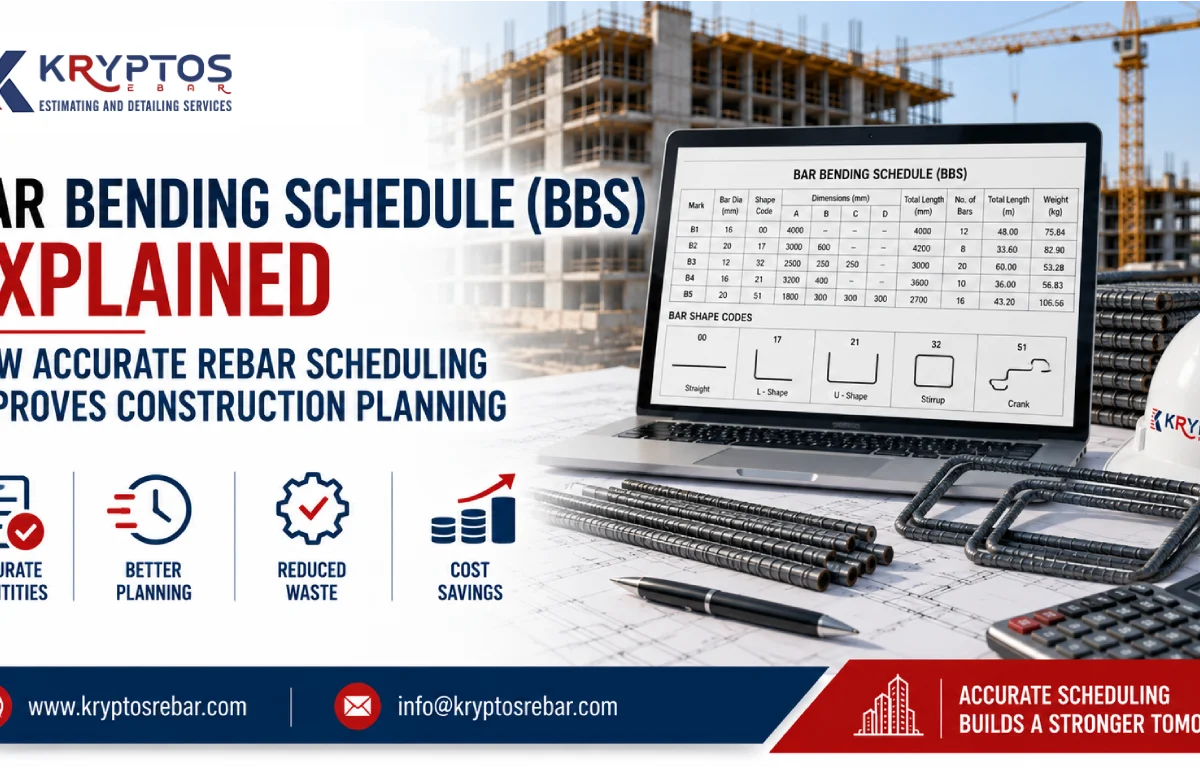
A Bar Bending Schedule (BBS) is more than a quantity sheet.
Accurate BBS preparation directly impacts:
1.Fabrication efficiency
2.Steel wastage
3.Installation speed
4.Site clarity
Poor BBS practices lead to:
1.Incorrect cutting lengths
2.Duplicate bars
3.Fabrication confusion
4.Procurement errors
A constructible BBS must include:
1.Clear bar marks
2.Accurate shapes
3.Correct dimensions
4.Proper lap locations
5.Logical sequencing
Standards such as
👉 BS 8666 Reinforcement Scheduling Standard
https://www.bsigroup.com/en-GB/bs-8666/
help ensure accurate reinforcement scheduling and bending practices.
Common Constructability Mistakes in Rebar Detailing
Mistakes That Cause Major Site Problems
🔹 Excessive Bar Congestion
Too many large-diameter bars in confined zones.
🔹 Poor Lap Splice Planning
Improper lap locations increase congestion and weaken constructability.
🔹 Ignoring Concrete Flow
Insufficient spacing prevents proper compaction.
🔹 Unclear Shop Drawings
Confusing reinforcement layouts slow down site work.
🔹 No Sequencing Logic
Bars become impossible to place in correct order.
🔹 Lack of Coordination
Conflicts with sleeves, openings, and MEP systems.
How Constructability Improves Project Efficiency
Benefits of Practical Rebar Detailing
When constructability is prioritized, projects achieve:
✅ Faster Installation
Workers understand placement clearly.
✅ Reduced Rework
Fewer site modifications and corrections.
✅ Lower Material Waste
Optimized reinforcement usage.
✅ Better Concrete Quality
Improved spacing allows proper vibration.
✅ Improved Safety
Reduced congestion improves worker access.
✅ Faster Project Delivery
Smooth workflows minimize delays.
Constructability ultimately saves:
1.Time
2.Cost
3.Labor
4.Material
while improving structural quality.
Constructability and BIM Workflows
Digital Coordination Before Construction
Modern rebar detailing increasingly depends on BIM workflows for constructability analysis.
Using software like:
1.AutoCAD
2.Tekla Structures
3.Revit
4.RebarCAD
detailers can:
1.Detect clashes
2.Visualize reinforcement placement
3.Validate spacing
4.Improve sequencing
👉 Tekla Structures
https://www.tekla.com/products/tekla-structures
These digital workflows significantly reduce field errors and improve constructability outcomes.
Best Practices for Constructability in Rebar Detailing
Practical Approaches That Improve Site Execution
🔹 Maintain Proper Bar Spacing
Allow concrete flow and worker accessibility.
🔹 Use Smaller Bar Diameters Strategically
Reduce congestion in critical zones.
🔹 Coordinate Early with All Disciplines
Avoid clashes before fabrication.
🔹 Simplify Reinforcement Layouts
Complexity increases execution risk.
🔹 Optimize Lap Locations
Prevent overlapping congestion zones.
🔹 Use Constructible Shop Drawings
Drawings must be clear and easy to interpret on-site.
Why Constructability Matters More in Modern Projects
Complex Structures Demand Better Detailing
Today’s projects involve:
1.High-rise buildings
2.Complex transfer systems
3.Dense MEP coordination
4.Faster timelines
This makes constructability more important than ever.
A technically strong design without constructability becomes:
1.Expensive
2.Slow
3.Risky
The future of construction depends on integrating engineering design with practical execution.
Conclusion
Constructability in Rebar Detailing is the bridge between structural engineering theory and successful site execution.
A drawing that cannot be practically built creates:
1.Delays
2.Rework
3.Congestion
4.Cost overruns
5.Structural risks
By prioritizing constructability, engineers and detailers can ensure reinforcement is not only structurally correct but also fabrication-ready, site-friendly, and efficient to execute.
At Kryptos Rebar, every detailing workflow is designed around constructability, coordination, and execution accuracy helping projects move from design to construction with confidence.
Need Accurate & Constructible Rebar Detailing for Your Project?
Connect with Kryptos Rebar for precision-driven rebar detailing, estimation, and constructability-focused reinforcement solutions.
📩 Email now: [email protected]
Let’s optimize your structure with precision and confidence.