




How Estimation Decisions Influence Procurement, Cash Flow, and Project Performance
Estimation Decisions in Construction play a far greater role than simply calculating material quantities or preparing project budgets. Every estimate developed during the pre-construction stage directly influences procurement planning, project cash flow, resource allocation, scheduling, and overall project success. A single inaccurate estimation decision can trigger material shortages, procurement delays, budget overruns, and costly project disruptions that affect every stakeholder involved.
In today’s competitive construction industry, project owners, structural engineers, contractors, procurement managers, and rebar fabricators rely on accurate estimation to make informed decisions before work begins. Whether the project involves residential buildings, commercial developments, industrial facilities, or large-scale infrastructure, estimation serves as the financial and operational foundation of the entire construction lifecycle.
Professional estimation is no longer limited to producing quantity take-offs. It has evolved into a strategic planning process that supports procurement forecasting, cost control, supplier management, risk mitigation, and project scheduling. Every reinforcement quantity, material specification, and procurement timeline established during estimation directly impacts project execution from start to finish.
This article explores how estimation decisions influence procurement, cash flow, and overall project performance while highlighting the importance of accurate rebar estimation in delivering successful construction projects.
👉 Rebar Detailing Services
kryptosrebar.com/service/
Why Estimation Decisions Matter
Every successful construction project begins with reliable estimation. Before contractors purchase materials, negotiate supplier contracts, or mobilize labor, they require dependable quantity information that reflects the actual project scope.
Accurate estimation enables project teams to answer critical questions such as:
1.How much reinforcement steel is required?
2.When should procurement begin?
3.How much capital is needed each month?
4.Which suppliers should be engaged?
5.What contingency should be allocated for project risks?
When these questions are answered correctly during estimation, procurement teams can confidently develop purchasing strategies that reduce waste, prevent delays, and improve budget accuracy.
Conversely, inaccurate estimates create uncertainty across the project.
Procurement teams may order excessive materials that tie up working capital or underestimate requirements, leading to emergency purchases at higher prices. Both scenarios increase project costs and negatively impact profitability.
Professional estimation transforms project planning from reactive decision-making into proactive project management.
How Estimation Supports Procurement Planning
Procurement is far more than purchasing reinforcement steel. It involves strategic planning to ensure the right materials arrive at the correct location, in the required quantities, and at the appropriate time.
Every procurement activity begins with the estimator’s quantity calculations.
When estimation is performed accurately, procurement teams can:
1.Forecast future material demand
2.Schedule supplier deliveries efficiently
3.Compare supplier quotations accurately
4.Reduce inventory carrying costs
5.Avoid unnecessary material storage
6.Improve purchasing negotiations
Instead of ordering all reinforcement at once, procurement managers can phase material deliveries according to construction progress. This minimizes storage issues while ensuring reinforcement remains available whenever required.
Accurate estimation also improves supplier confidence. Vendors receive clear quantity information, allowing them to prepare competitive quotations and maintain reliable delivery schedules.
As construction projects continue to grow in complexity, procurement planning increasingly depends on digital estimation workflows integrated with BIM technologies and reinforcement detailing software.
The Relationship Between Estimation and Cash Flow
Cash flow represents the financial health of every construction project.
Regardless of project size, contractors must continuously balance incoming payments against outgoing expenses, including material purchases, labor costs, equipment rentals, subcontractor payments, and site operations.
Estimation directly influences this financial balance.
Accurate quantity calculations allow financial teams to forecast project expenditures months before procurement begins. This enables organizations to:
1.Prepare realistic budgets
Plan monthly expenditures
2.Allocate working capital effectively
3.Schedule supplier payments
4.Improve financial forecasting
5.Reduce borrowing requirements
Poor estimation creates unpredictable spending patterns.
For example, underestimating reinforcement quantities may force contractors to purchase additional steel unexpectedly during construction. Emergency procurement often involves premium pricing, expedited shipping, and unplanned expenditures that disrupt project cash flow.
Overestimation creates a different challenge.
Ordering excessive reinforcement increases inventory costs while locking valuable capital into unused materials. Cash that could support other project activities becomes tied up in unnecessary stock.
Professional estimation helps maintain balanced cash flow by aligning procurement activities with actual construction requirements.
Impact on Project Scheduling
Construction schedules depend heavily on material availability.
Even highly skilled construction teams cannot maintain productivity if reinforcement materials arrive late or in insufficient quantities.
Accurate estimation allows procurement teams to synchronize purchasing schedules with construction milestones.
Instead of reacting to shortages, project managers can coordinate deliveries according to:
1.Foundation construction
2.Column reinforcement
3.Beam installations
4.Slab construction
5.Core wall reinforcement
6.Structural sequencing
This phased procurement approach minimizes site congestion while ensuring reinforcement remains available throughout each stage of construction.
Estimation also supports long-lead procurement planning.
Special reinforcement products, custom-fabricated cages, welded assemblies, or imported materials often require extended manufacturing periods. Early identification through estimation allows procurement teams to place purchase orders before schedule risks develop.
Without accurate estimation, project timelines become vulnerable to procurement delays, supplier shortages, and unexpected schedule disruptions.
Cost Control Through Accurate Estimation
Effective cost control begins long before construction starts.
Every material quantity calculated during estimation contributes directly to project budgeting and financial planning.
Professional estimation helps organizations control costs by:
1.Reducing material waste
2.Eliminating duplicate purchases
3.Preventing emergency procurement
4.Improving supplier negotiations
5.Supporting competitive tendering
6.Minimizing inventory costs
Accurate reinforcement quantities also improve bid competitiveness.
Contractors can submit realistic pricing based on dependable quantity take-offs rather than conservative assumptions or excessive contingencies.
This balance improves win rates while protecting project profitability.
Furthermore, accurate estimation supports continuous cost monitoring throughout construction. As project revisions occur, estimators can quickly evaluate quantity changes and forecast their financial impact before procurement decisions are made.
Rather than discovering budget overruns after materials have been ordered, project teams maintain complete financial visibility throughout the construction lifecycle.
How Accurate Estimation Improves Overall Project Performance
Project performance is measured by three primary factors: completing work on time, staying within budget, and meeting quality expectations. Accurate estimation supports all three by providing reliable information before construction begins.
When procurement teams receive dependable quantity data, they can purchase reinforcement steel according to the construction schedule instead of reacting to unexpected shortages. This keeps work progressing without unnecessary interruptions and improves coordination between engineering, procurement, fabrication, and site execution.
Accurate estimation also strengthens communication across project stakeholders. Structural engineers, contractors, project managers, and rebar fabricators work from the same quantity information, reducing misunderstandings and improving decision-making throughout the project.
Another significant benefit is improved resource planning. Knowing the exact quantities of reinforcement required allows project managers to allocate labor, equipment, fabrication capacity, and storage space more efficiently. This prevents bottlenecks and supports smoother site operations.
Ultimately, projects that begin with reliable estimation experience fewer delays, reduced material waste, improved financial performance, and greater client satisfaction.
Managing Project Risks Through Better Estimation
Every construction project involves risk. Material price fluctuations, design revisions, supply chain disruptions, labor shortages, and scheduling conflicts can all impact project outcomes. While these risks cannot always be eliminated, professional estimation helps organizations prepare for them more effectively.
One of the most common procurement risks is underestimating reinforcement quantities. When actual site requirements exceed estimated quantities, procurement teams are forced to arrange emergency material purchases. These last-minute orders often come with premium pricing, expedited transportation costs, and extended delivery times, placing additional pressure on both the project budget and schedule.
Overestimation creates a different challenge. Ordering excessive reinforcement ties up valuable working capital, increases storage requirements, and raises the risk of material damage, corrosion, or unused inventory. In many cases, surplus materials cannot be returned or reused efficiently, resulting in unnecessary project costs.
Professional estimation minimizes these risks by validating reinforcement quantities before procurement begins. Regular quantity verification, drawing reviews, and coordination with structural engineers help identify potential issues early, allowing teams to make informed decisions before construction progresses.
As project designs evolve, continuous estimation updates also ensure procurement strategies remain aligned with the latest revisions. This proactive approach reduces uncertainty and strengthens overall project risk management.
Technology Is Transforming Construction Estimation
Construction estimation has evolved significantly over the past decade. Traditional manual quantity take-offs are increasingly being replaced by digital workflows that improve both speed and accuracy.
Modern estimation professionals use advanced software to generate detailed quantity reports directly from structural drawings and Building Information Modeling (BIM) environments. These digital tools improve consistency while reducing the likelihood of human error.
Technologies such as Tekla Structures, AutoCAD, and BIM platforms enable estimators to coordinate reinforcement quantities with structural models, detect potential conflicts, and update quantities as project revisions occur.
Digital estimation also improves collaboration between procurement teams, engineers, and rebar fabricators. Instead of relying on multiple spreadsheet versions or manually updated drawings, project stakeholders can access coordinated information that reflects the latest design changes.
Although software enhances productivity, experienced estimators remain essential. Professional judgment is required to interpret structural intent, identify constructability concerns, verify reinforcement details, and ensure quantities accurately represent field conditions.
Technology should therefore be viewed as a powerful support tool rather than a replacement for experienced estimation professionals.
Best Practices for Estimation-Driven Procurement
Organizations that consistently deliver successful construction projects often follow similar estimation practices. These best practices improve procurement accuracy while strengthening overall project performance.
Some of the most effective approaches include:
1.Review all structural drawings before quantity take-offs begin.
2.Verify reinforcement quantities using independent quality checks.
3.Update estimates immediately after design revisions are issued.
4.Coordinate estimation with detailing teams to identify constructability concerns.
5.Develop phased procurement plans based on project schedules.
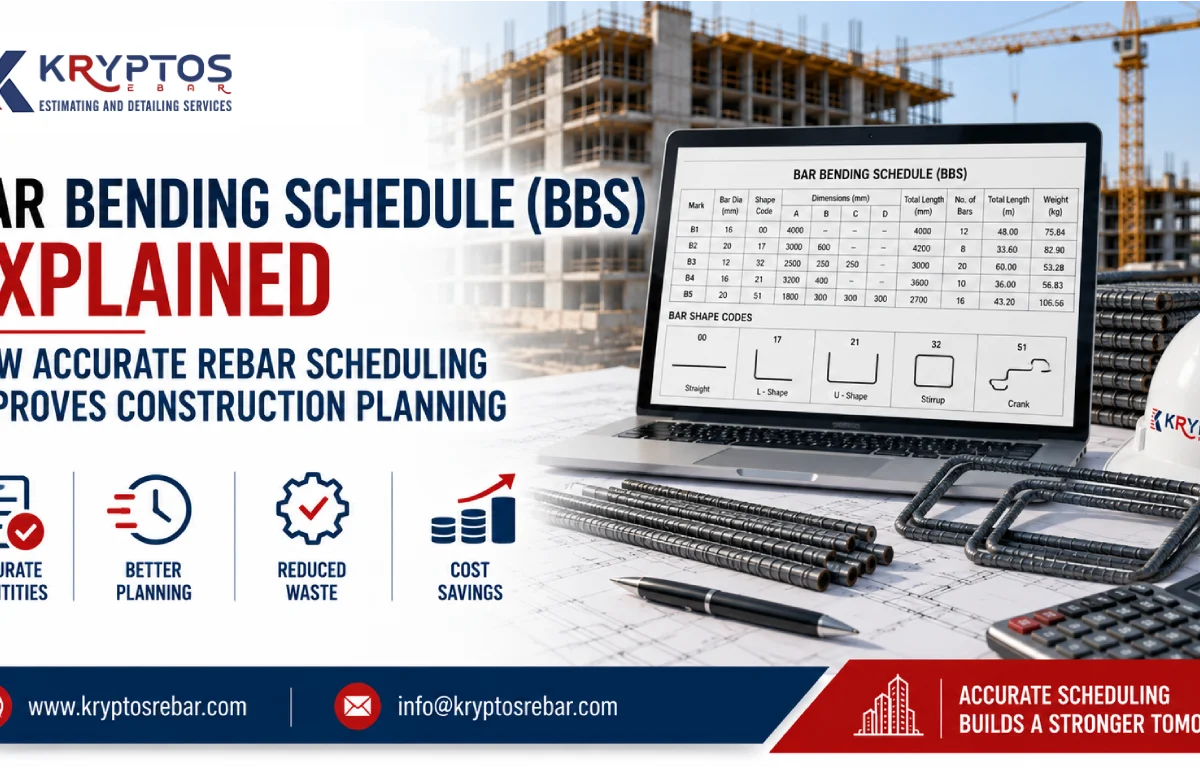
6.Maintain accurate Bar Bending Schedules (BBS) for fabrication.
7.Collaborate with suppliers early to understand manufacturing lead times.
8.Monitor quantity changes throughout construction rather than waiting until procurement deadlines.
9.Integrate estimation with BIM workflows whenever possible.
10.Maintain clear documentation for future project audits and quantity verification.
These practices create greater transparency throughout the procurement process while reducing financial uncertainty.
The Long-Term Value of Better Estimation Decisions
Construction projects continue to become more complex, with tighter budgets, shorter schedules, and increasing client expectations. Under these conditions, estimation is no longer simply a pre-construction activity—it is a strategic business function.
Every estimation decision influences procurement efficiency, cash flow stability, supplier relationships, project scheduling, and overall financial performance. Organizations that invest in professional estimation services consistently experience improved productivity, fewer procurement disruptions, reduced material waste, and stronger project outcomes.
For contractors, developers, engineers, and rebar fabricators, accurate estimation provides the confidence needed to make informed procurement decisions throughout every stage of construction.
Rather than reacting to unexpected quantity issues after construction begins, successful project teams rely on dependable estimation to anticipate challenges, allocate resources effectively, and deliver projects with greater certainty.
Conclusion
Estimation Decisions in Construction influence far more than project budgets. They shape procurement strategies, determine cash flow requirements, reduce operational risks, and improve overall project performance.
When reinforcement quantities are accurately estimated, procurement teams can purchase materials efficiently, financial managers can forecast expenditures with confidence, and construction teams can execute projects without unnecessary interruptions.
Professional estimation transforms procurement from a reactive purchasing process into a proactive business strategy. By integrating accurate quantity take-offs, continuous verification, coordinated detailing, and modern digital technologies, organizations position themselves for safer, faster, and more profitable project delivery.
As construction projects continue to grow in scale and complexity, estimation will remain one of the most valuable investments any project team can make.
Frequently Asked Questions
1. Why are estimation decisions important in construction?
Estimation decisions determine material quantities, procurement schedules, project budgets, and cash flow planning, directly influencing project success.
2. How does estimation affect procurement?
Accurate estimation allows procurement teams to purchase the right quantities at the right time, reducing shortages, waste, and unnecessary expenses.
3. Can poor estimation impact cash flow?
Yes. Inaccurate estimates often lead to emergency purchases, budget overruns, delayed payments, and inefficient allocation of working capital.
4. What tools improve construction estimation?
Industry professionals commonly use Tekla Structures, AutoCAD, BIM platforms, and digital quantity take-off software to improve estimation accuracy.
5. How often should estimates be updated?
Estimates should be reviewed and updated whenever structural drawings or project revisions change to maintain procurement accuracy.
🚀 Need Accurate Rebar Estimation You Can Trust?
Connect with Kryptos Rebar for precision-driven rebar detailing, estimation, and constructability-focused reinforcement solutions.
📩 Email now: [email protected]
Let’s optimize your structure with precision and confidence.